
Accidents can disrupt your routine and leave you wondering how long repairs will take. At 821 Collision, drivers receive clear timelines and professional collision repair services designed to restore vehicles safely and correctly. As a trusted collision center serving North Haledon, the focus remains on accurate repairs, proper procedures, and keeping customers informed at every stage.
Understanding the timeline for collision repair helps set realistic expectations. Repair duration can vary based on damage severity, vehicle type, and repair requirements. This guide explains how long collision repair takes, what affects the timeline, and what to expect when working with one of the leading auto body collision shops in North Haledon.
For a closer look at each repair type we handle, see our guide to the different collision repair services we offer.
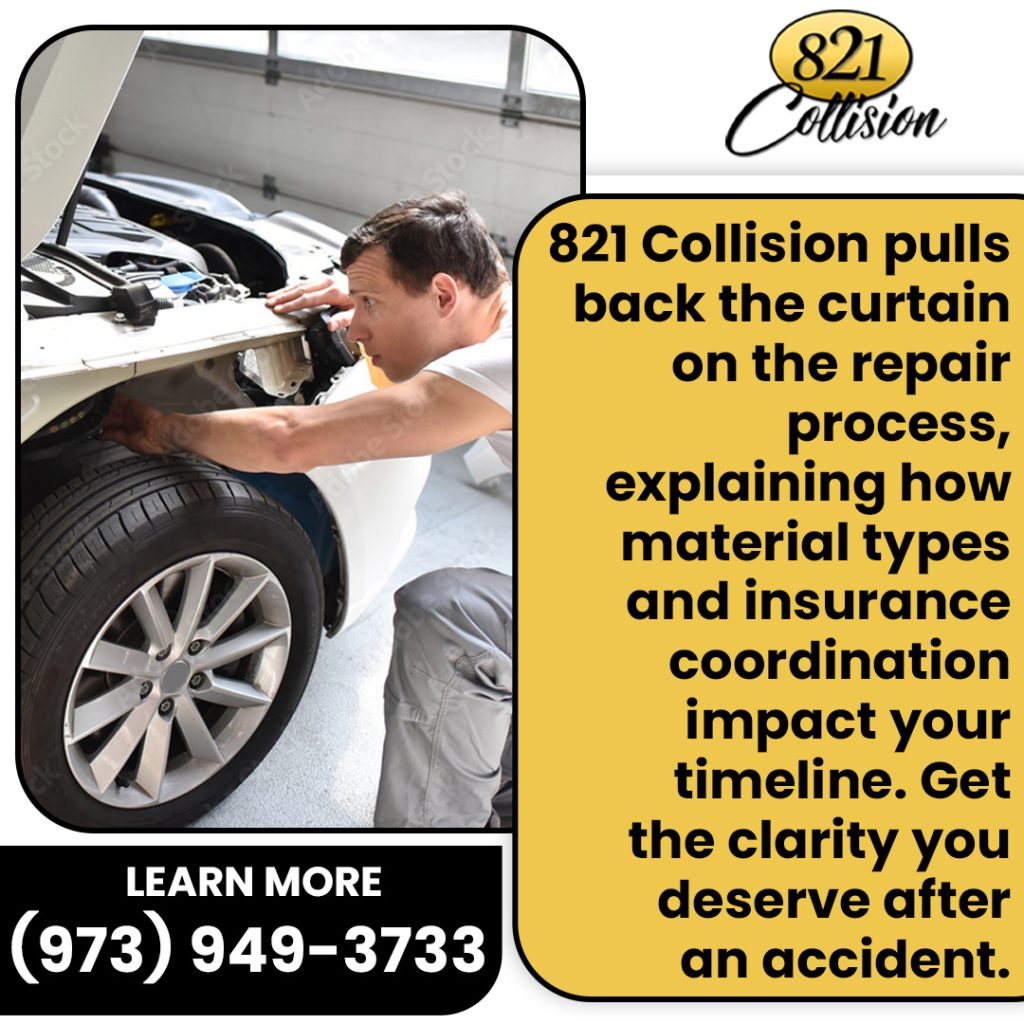
How Long Does Collision Repair Take?
Collision repair takes a few days to several weeks, depending on damage type and repair scope. You need a clear timeline before repairs begin. This helps you plan your schedule and understand how each stage affects completion time.
General Timeline Ranges by Repair Type
Understanding how repair time changes based on damage helps you set clear expectations. The level of damage directly affects how long your vehicle stays in the shop.
| Repair Type | Type of Damage | Scope of Work | Typical Timeline |
| Minor Damage | Small dents, light panel issues | Single-area repair with limited work | Few days |
| Moderate Damage | Multiple panels, alignment concerns | Multi-step repair across several areas | Several days |
| Severe Damage | Structural impact, extensive damage | Multi-stage repair including structural work | Weeks or longer |
Why Timelines Vary Be tween Repairs
Repair timelines vary because each vehicle requires a different level of work and repair approach. No two accidents create the same type of damage. The condition of your vehicle and the work required will always influence how long the repair takes.
Some repairs are limited to one section of the vehicle. Others involve multiple areas that must be addressed together. As the scope increases, the repair process takes more time to complete. Each vehicle is built with different materials and systems. Some require additional repair steps or specialized handling. These added requirements increase the total repair time.
What Determines How Long Your Collision Repair Will Take?
Collision repair time depends on damage depth, vehicle materials, and repair complexity. These factors define the amount of work required and how the repair process is carried out from start to finish.
Extent of Visible and Internal Damage
Some vehicles show only surface-level damage, such as dents or scratches. In these cases, repairs remain limited to exterior areas and require fewer steps. In other cases, damage extends beyond what is visible. Internal components or structural sections may be affected and only identified after disassembly. This adds more steps to the repair process and increases the total time required.
Type of Vehicle Materials Involved
Vehicles are built using different materials, and each one requires a specific repair method. Standard steel follows widely used repair procedures that most collision repair services handle regularly.
Vehicles built with aluminum or mixed materials require specialized tools and handling. These materials behave differently during repair, which adds complexity and increases the amount of work involved.
Level of Repair Complexity
Some repairs are limited to a single section of the vehicle. These follow a direct process with fewer steps and shorter completion time. Other repairs involve multiple damaged areas that must be addressed in stages. Each stage depends on the completion of the previous one, which adds to the overall repair duration.
What Happens Before Collision Repair Begins?
The repair process starts before any physical work is performed on the vehicle. These initial steps define the scope of work and prepare the vehicle for proper repair.
Vehicle Intake and Condition Recording
When a vehicle arrives at a collision center, the intake process begins with a detailed review of its condition. Visible damage is recorded to establish a clear starting point for the repair. Photos and notes are taken to document affected areas. This record is used throughout the repair process to track changes and confirm the condition of the vehicle before work begins.
Initial Repair Estimate Preparation
After the intake process, an initial estimate is prepared based on the visible damage. This step outlines the expected repair work and identifies the areas that need attention. The estimate serves as a baseline for the repair plan. It may be updated later if additional damage is found during disassembly.
Repair Scheduling and Workflow Placement
Once the estimate is prepared, the vehicle is scheduled for repair. It is placed within the shop’s workflow based on the type of repair required and current workload. This step organizes how and when the repair will begin. Proper scheduling helps maintain a structured process and allows each stage of the repair to move in order.
What Can Extend Collision Repair Time During the Process?
Collision repair does not always follow the original timeline from start to finish. Changes during the repair process can add time as new conditions are identified and addressed.
Hidden Damage Found After Disassembly
Some damage is not visible during the initial inspection. Once the vehicle is taken apart, internal issues may be discovered behind panels or within structural areas. These findings require updates to the repair plan. Additional repair steps are added based on the condition uncovered during disassembly, which increases the overall repair time.
Additional Approvals During Repair
Repairs sometimes go beyond what was included in the initial estimate. When new damage is identified, the repair scope must be revised. This requires approval before work continues on the newly identified areas. The repair process may pause until the updated scope is reviewed and authorized.
Parts Delivery Timing
Certain repairs depend on the availability of specific parts. If the required components are not immediately available, the repair cannot move forward in that area. Waiting for the correct parts, including OEM components used in collision repair services, can extend the repair timeline. The process resumes once all necessary parts are received.
Breakdown of the Collision Repair Phases
Collision repair follows a defined sequence of work. Each phase handles a specific part of the vehicle and moves the repair forward step by step.
Structural Repair Phase
This phase focuses on the vehicle’s frame and core structure. Any distortion caused by the collision is corrected at this stage.
Key steps include:
- Measuring the frame against the manufacturer’s specifications
- Realigning structural components to original positions
- Securing the structure before moving to exterior work
Body Repair Phase
After structural corrections, the repair moves to exterior components. This phase addresses visible damage to the vehicle’s body.
This stage includes:
- Repairing damaged panels where possible
- Replacing panels that cannot be restored
- Preparing panel surfaces for the next stage
Refinishing Phase (Affected Areas Only)
This phase restores the appearance of repaired sections. Only the areas that were repaired receive refinishing work.
This process involves:
- Matching the paint color to the vehicle’s existing finish
- Applying paint to repaired sections
- Finishing surfaces to align with the surrounding areas
Reassembly and System Checks
The final phase brings all components back together. The vehicle is reassembled and reviewed before completion.
Key actions include:
- Reinstalling previously removed parts
- Confirming proper fit and placement of components
- Checking that systems respond correctly after reassembly
The Role of 821 Collision in Managing Repair Timelines
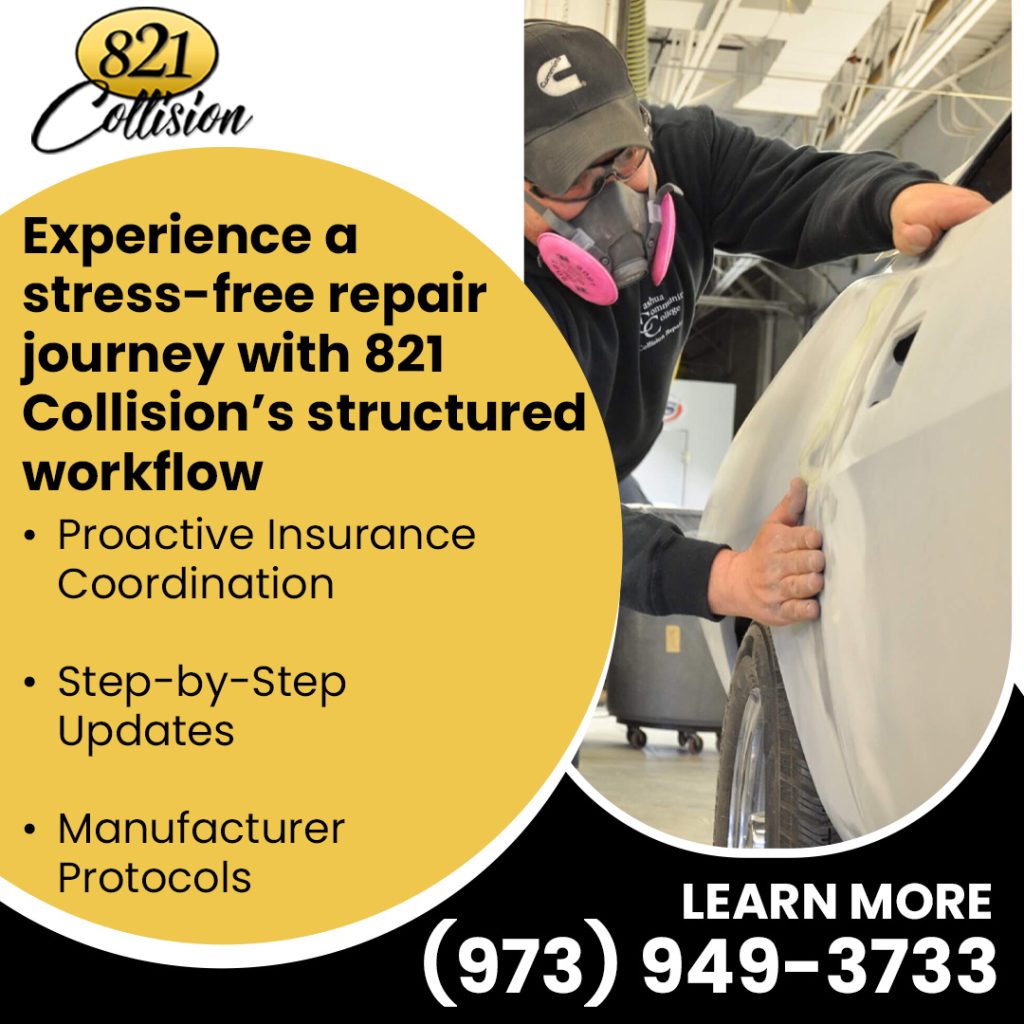
821 Collision manages repair timelines through a structured and organized approach. Each step in our process is planned to keep your repair moving without unnecessary delays. We follow a clear workflow, so every stage progresses in order. This allows us to maintain consistency from start to finish.
Timeline Development Based on Detailed Inspection
At 821 Collision, we begin with a detailed inspection of your vehicle. This step allows us to identify the full scope of damage based on its actual condition. We build your estimate around what we find during this inspection. This gives us a clear starting point for the repair process.
Execution of Manufacturer Repair Procedures
We perform all repairs according to the manufacturer’s repair procedures. Each phase follows the required steps specific to your vehicle. This keeps the repair process structured and consistent. Our team completes each stage in sequence based on these procedures.
Early Identification of Additional Damage
We look for hidden damage early in the process. This includes inspection and disassembly when needed. Identifying issues at this stage helps us adjust the repair plan before moving further. This reduces interruptions later in the repair.
Direct Coordination with Insurance Providers
Repair progress often depends on approvals and documentation. At 821 Collision, we manage communication with insurance providers alongside the repair process, helping align approvals with the actual work required.
In his April 2026 article “The Game Has Changed” published in New Jersey Automotive magazine, Ken Miller, co-owner of 821 Collision and President of AASP/NJ, highlighted how the claims process has shifted, with less flexibility in approvals and greater responsibility placed on repair shops to document every detail. This makes clear communication with both insurers and customers more important than ever.
At 821 Collision, every step of the repair is documented and explained. Any limitations or denied items from the insurance provider are clearly communicated to you, so you understand how they may affect the repair. This approach supports transparency, maintains repair quality, and keeps you informed throughout the process.
Ongoing Customer Communication
We keep you updated throughout the repair process. You receive clear information at each stage, so you know what is happening with your vehicle. Our updates follow the progress of the repair from start to finish. This reflects the level of service expected from trusted auto body collision shops in North Haledon.
Frequently Asked Questions About Collision Repair Timelines
Q: How long does collision repair usually take?
Collision repair can take anywhere from a few days to several weeks. The duration depends on how much damage the vehicle has and the type of repair work required to restore it.
Q: Why can repair time increase after work begins?
Repair time may increase if additional damage is discovered during the repair process. This often requires updates to the repair plan before work can continue on the affected areas.
Q: Does every collision repair require disassembly?
Not every repair requires full disassembly of the vehicle. However, partial disassembly is often necessary to inspect areas that are not visible during the initial evaluation.
Q: What causes delays in collision repair services?
Delays can occur when approvals are still pending or when specific parts are not immediately available. Additional repair work identified during the process can also extend the overall timeline.
Schedule Your Collision Repair with 821 Collision
Get a clear repair timeline and reliable service from 821 Collision. Contact the team today to discuss your vehicle’s condition and start the repair process without delays. Call (973) 949-3733 or email admin@821collision.com to book your consultation and receive an accurate assessment of your collision repair needs.