Your car’s body panel material, whether steel, aluminum, or composite, determines the tools, welding methods, and repair time needed after a collision. At 821 Collision, we provide auto body repair near Prospect Park, NJ, that matches every method to the exact material on your vehicle. Choosing the wrong method can weaken structural strength and void your warranty. As an I-CAR Gold Class facility with a broad OEM certification portfolio, 821 Collision has the training and equipment to work across these different materials correctly.
What Makes Steel, Aluminum, and Composite Panels Different?
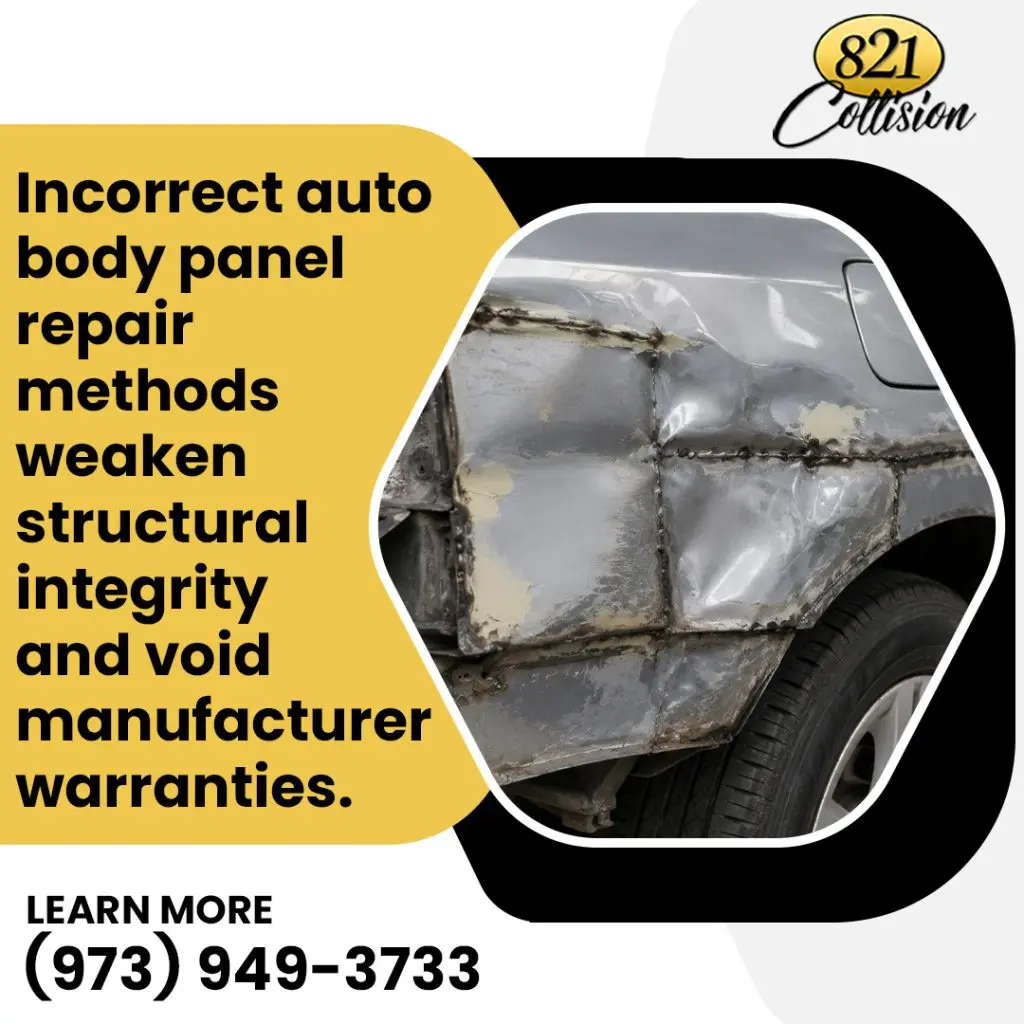
Each material reacts to damage differently. Steel bends and can often be reshaped. Aluminum is lighter but cracks more easily under stress. Composite panels, found on some hoods and body kits, cannot be welded at all. Knowing which material you’re working with matters even for simple auto body dent and scratch repair, not just major collision work.
Common Panel Materials on Today’s Vehicles
- High-strength steel: Used in frames and doors for crash protection.
- Aluminum: Common on hoods, fenders, and full-body EVs to reduce weight.
- Composite and carbon fiber: Used on performance trim, spoilers, and some hoods.
- Mixed-material bodies: Many newer vehicles combine two or three materials in one structure.
Why Does Panel Material Change the Repair Process?
The repair method depends on the metal, not on the size of the dent. Steel panels typically allow spot welding. Aluminum needs different tools and settings, and it shows up in more vehicles every year as automakers look to reduce weight. Composite panels are repaired with bonding and adhesive systems instead of heat.
This is one reason any local auto body repair shop should identify your panel material before quoting a price and why we recommend OEM-certified collision repair over a generic estimate. The correct process protects both the repair and your vehicle’s built-in safety systems.
How Do Repair Costs and Timelines Compare by Material?
| Panel Material | Repair Method | Typical Timeline |
| Steel | Welding, panel reshaping | 2 to 4 days |
| Aluminum | Isolated welding, specialized tools | 3 to 6 days |
| Composite | Adhesive bonding, no welding | 2 to 5 days |
Timelines vary based on damage severity and part availability, not material alone, even for straightforward auto body dent and scratch repair.
What Tools and Certifications Does Proper Panel Repair Require?
Repairing multiple panel materials correctly takes more than one certification. If you’re comparing options for auto body repair near Prospect Park, NJ, ask what manufacturer certifications the shop holds and how often technicians complete updated training.
- Manufacturer-specific certifications for your vehicle’s make
- Ongoing technician training as OEM procedures are updated
- Documented access to current repair specifications
- A clear explanation of why a specific method fits your panel material
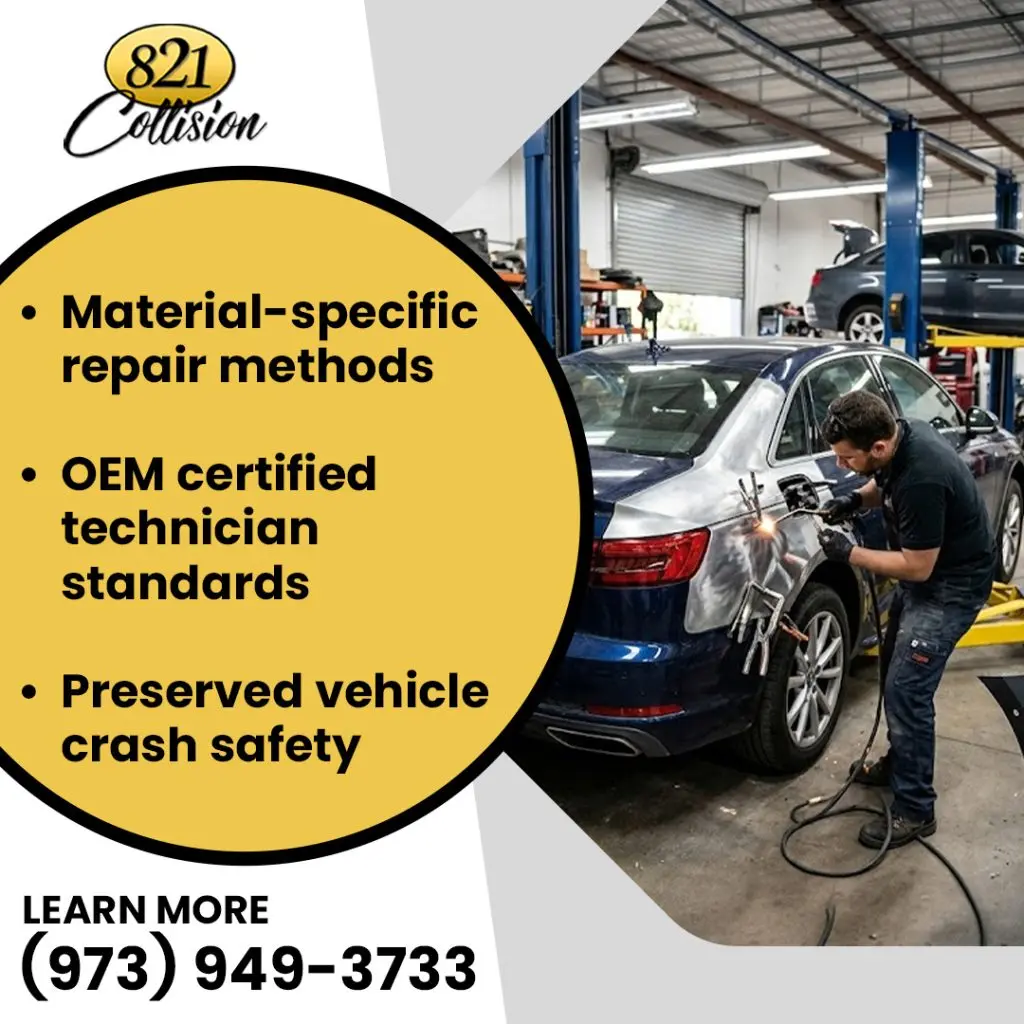
At 821 Collision, our technicians hold I-CAR training and multiple OEM certifications to keep every repair plan aligned with your vehicle’s factory specifications. Aluminum work in particular calls for its own equipment and training beyond a standard steel repair setup, and our shop holds both the Cadillac CT6 Aluminum and Hummer EV certifications, two programs built specifically around aluminum-intensive structures and high-voltage EV safety protocols. That aluminum-specific credentialing is what allows us to handle these panels correctly rather than treating them like steel.
Frequently Asked Questions
Can a dent be repaired without repainting the panel?
Small dents on undamaged paint can sometimes be fixed with paintless dent repair, which skips refinishing entirely.
Does panel material affect my insurance estimate?
Yes. Aluminum and composite repairs often require more labor hours and specialized parts, which can change the estimate.
Will a repaired composite panel look the same as the original?
When bonded and finished correctly, a composite panel repair should match the original panel’s fit and finish.
How do I know what material my car’s panels are made from?
Your owner’s manual or a technician using OEM documentation can confirm panel material before repair begins.
Get the Right Repair for Your Panel Material
Not every shop can match its equipment and training to every panel material. 821 Collision can review your vehicle’s specific repair needs and quote the right approach for your panel type. Contact our team at (973) 949-3733 or email admin@821collision.com to schedule an evaluation.