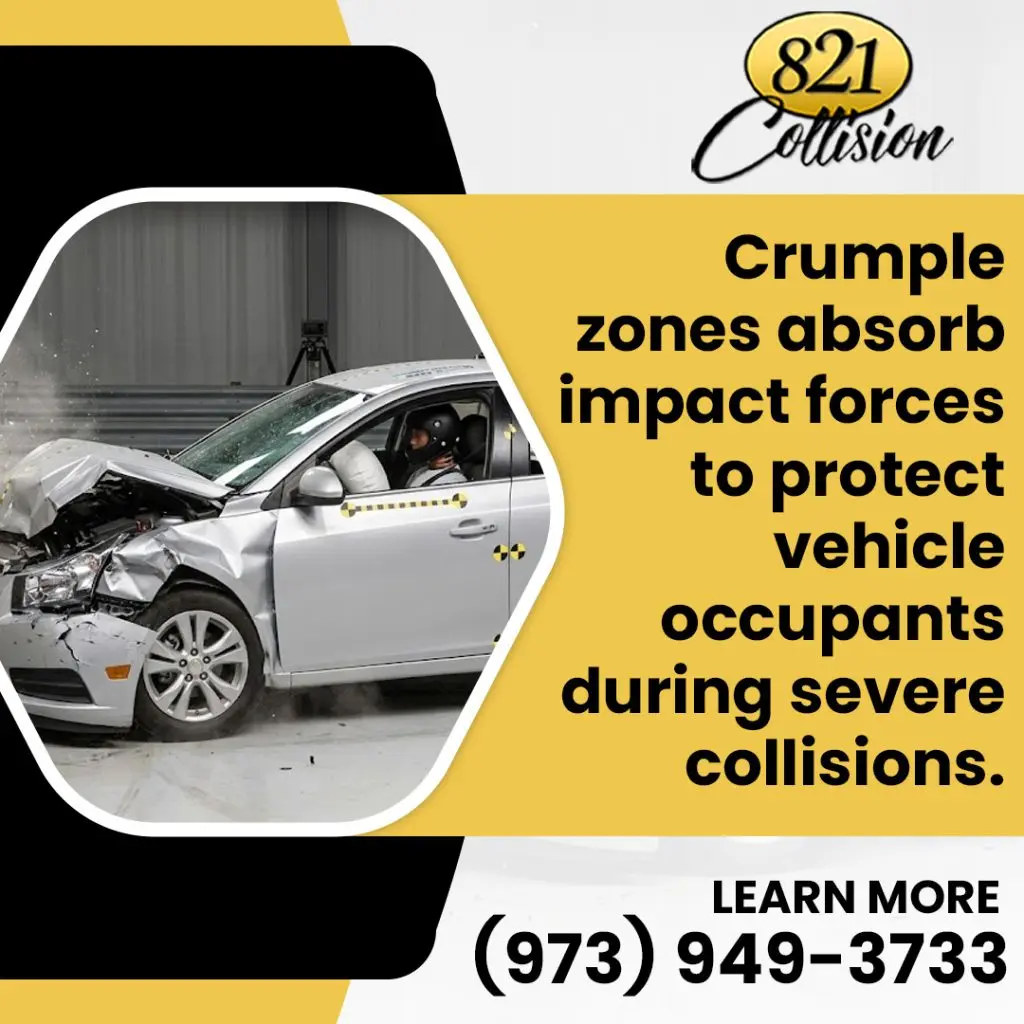
Crumple zones are sections at the front and rear of a vehicle designed to collapse in a crash, absorbing energy before it reaches the passenger cabin. At 821 Collision, we see firsthand how these zones protect drivers, which is why proper repair after a crash matters as much as the crash itself. Anyone searching for collision repair near Prospect Park, NJ, should understand how these areas work before approving repairs.
What Are Crumple Zones and How Do They Work?
Crumple zones work by slowing down the crash, not the car. They stretch out the time it takes a vehicle to stop, which lowers the force that reaches the people inside. Any auto collision repair center working on a damaged vehicle needs to understand this before starting structural work.
How Crumple Zones Absorb Crash Energy
Instead of stopping instantly, the front or rear structure folds and deforms in a controlled way, spreading impact energy over a longer period and reducing the peak force reaching the safety cell. Engineers design this failure pattern deliberately, so the cabin stays intact while the outer structure absorbs the hit.
Why Do Crumple Zones Matter More With Modern Vehicles?
Modern vehicles rely on crumple zones as a core part of occupant protection, alongside seatbelts and airbags. According to NHTSA’s New Car Assessment Program, frontal crash tests measure how well a vehicle’s structure protects occupants in a head-on collision at 35 mph, confirming whether a crumple zone performed as engineered.
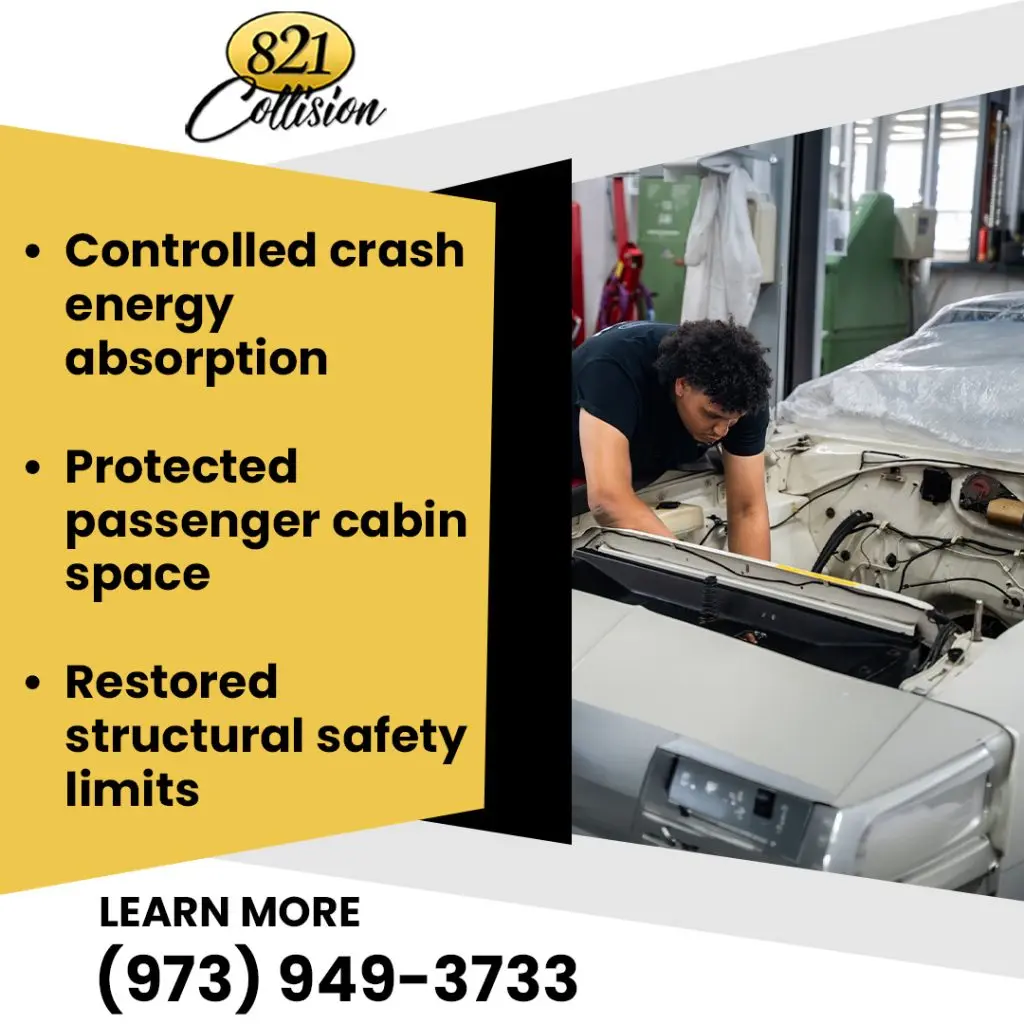
That is exactly why post-accident collision repair services must restore a crumple zone to its factory specification. A repair that only recreates the vehicle’s appearance, without rebuilding its original crush characteristics, leaves the safety system compromised. 821 Collision’s I-CAR Gold Class status and OEM certifications, across manufacturers including Lexus, GM, Honda, and Acura, are what allow us to follow those factory procedures rather than approximate them.
How Do Crumple Zones Compare to Older Rigid Frames?
| Factor | Older Rigid Frame | Modern Crumple Zone Design |
| Impact response | Stops abruptly | Deforms in stages |
| Force to occupants | High, transferred directly | Reduced, spread over time |
| Vehicle damage | Often minimal | Often visible, by design |
| Occupant outcome | Higher injury risk | Lower injury risk when intact |
A car that looks heavily damaged after a crash may have done its job correctly. This is one reason drivers searching for collision repair near Prospect Park, NJ, should ask how a shop verifies structural repair, not just cosmetic finish.
Why Does Crumple Zone Damage Look Worse Than It Is?
Visible damage after a crash often means the crumple zone absorbed energy as designed, not that something went wrong. A buckled hood, shattered bumper, or folded fender are normal signs the structure protected the cabin.
Signs of Crumple Zone Damage
- Hood or fenders that no longer align correctly
- A hood that won’t latch securely
- Doors that stick or don’t close flush
- Visible buckling near the front or rear frame rails
Any auto collision repair center should point out these signs during an estimate, before a full teardown. At 821 Collision, we look past cosmetic damage to check the structure underneath before quoting any repair.
Frequently Asked Questions
Can a crumple zone be reused after a minor crash?
Sometimes, but only after a technician confirms the structure wasn’t stretched or weakened beyond repair specifications.
Do all cars have the same type of crumple zone?
No. Design varies by manufacturer, vehicle size, and whether the vehicle is gas-powered or electric.
Does a damaged crumple zone always mean a totalled car?
Not necessarily. Many crumple zone repairs are structural but still cost-effective compared to replacement.
Will insurance cover crumple zone repair?
Most policies cover structural repair after a covered collision, though coverage details vary by policy.
Trust Your Structural Repair to 821 Collision
Crumple zones only protect you if they’re repaired the first time correctly. 821 Collision follows manufacturer procedures on every structural repair, so your vehicle’s safety systems work the way they were designed to. Reach our team at (973) 949-3733 or email admin@821collision.com to get your vehicle properly assessed.