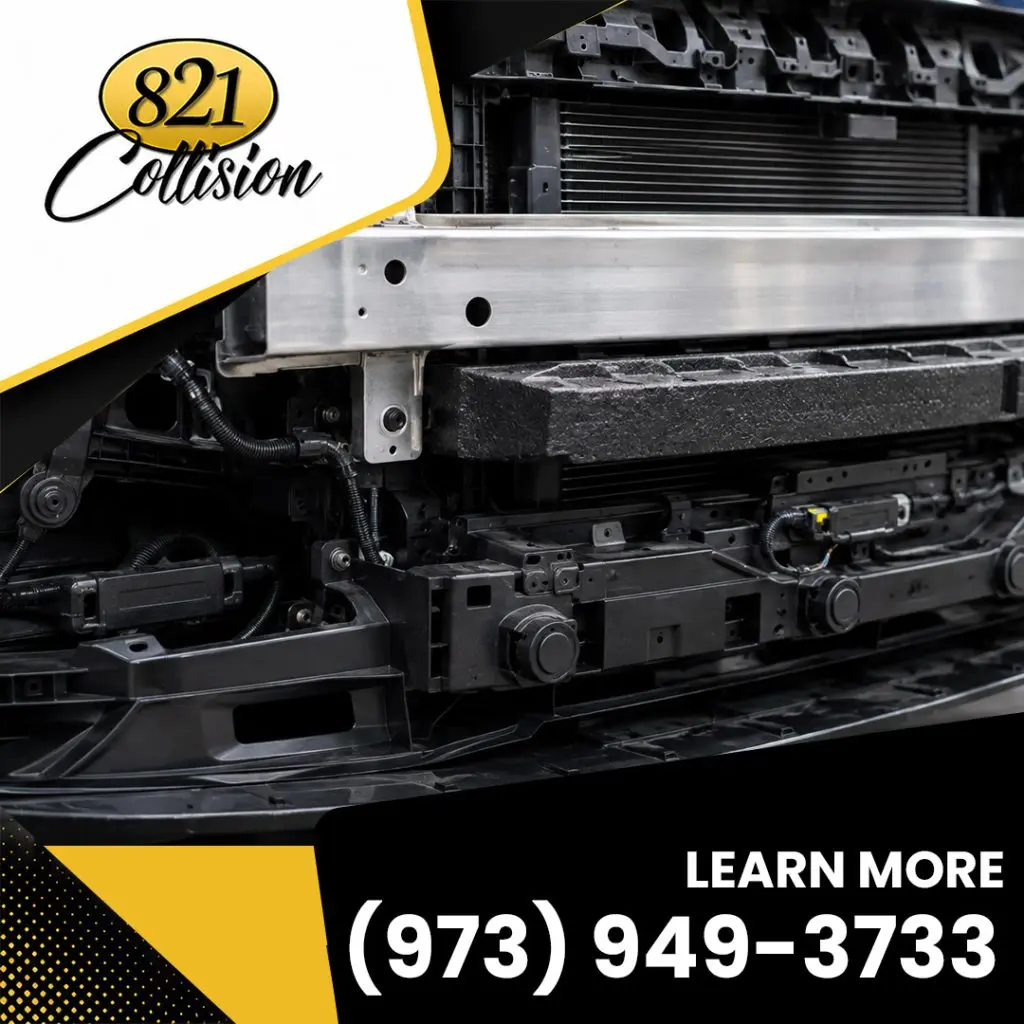
Behind the painted cover, most bumpers hide a reinforcement bar, foam absorber, mounting brackets, wiring, and often parking or radar sensors. At 821 Collision, we check all of these parts after any impact, since a local auto body repair shop that only looks at the surface can miss components that affect safety.
What Components Sit Behind a Typical Bumper Cover?
A bumper isn’t a single piece. Underneath the outer cover, most vehicles have:
- A metal or composite reinforcement bar that absorbs impact energy
- A foam or honeycomb absorber that cushions low-speed hits
- Plastic and metal brackets that hold the cover to the frame
- Wiring, parking sensors, radar units, or camera housings on many newer models
Drivers searching for auto body dent and scratch repair often assume the job stops at the paint, but a technician working on these layers needs to check what’s underneath first.
Why Sensors Need Recalibration After a Repair
Parking sensors and radar units sit at a precise angle. A small shift during a repair, or from the original impact, can throw off their aim. That’s why our 821 Collision technicians, trained through I-CAR’s certification programs, treat calibration as a required step, not an add-on.
How Do These Hidden Parts Affect Vehicle Safety?
Each component plays a specific role, and damage to any one can reduce protection in a future collision or cause a safety feature to stop working. It’s one reason vehicle owners comparing quotes for auto body repair near Paterson, NJ, should ask what gets inspected beyond the outer panel.
| Component | Function | Risk If Damaged |
| Reinforcement bar | Absorbs and spreads impact force | Reduced crash protection |
| Foam absorber | Cushions low-speed impacts | Less protection in repeat hits |
| Mounting brackets | Holds the cover in place | Loose or misaligned bumper |
| Sensors/wiring | Powers parking and safety alerts | False alerts or no warning at all |
What Should Paterson Drivers Watch For After a Bump?
A bumper that looks fine after a minor tap can still have a cracked bracket or a sensor sitting a few degrees off. Drivers comparing options for auto body repair near Paterson, NJ, should ask whether an estimate includes checking these hidden parts, not just the visible panel.
According to NHTSA’s guidance on driver assistance technology, rear automatic braking uses sensors, including parking sensors mounted near the bumper, to detect objects behind the vehicle and apply the brakes if a crash is imminent. When those sensors are bent or out of position, the feature can stop working as intended.
When Should a Bumper Be Opened Up for Inspection?
Any impact worth an estimate is worth a look behind the cover, including:
- Rear-end taps in parking lots or driveways
- Backing into a post, curb, or trailer hitch
- Front-end contact at low speed, even without visible cracking
- Any collision followed by a warning light
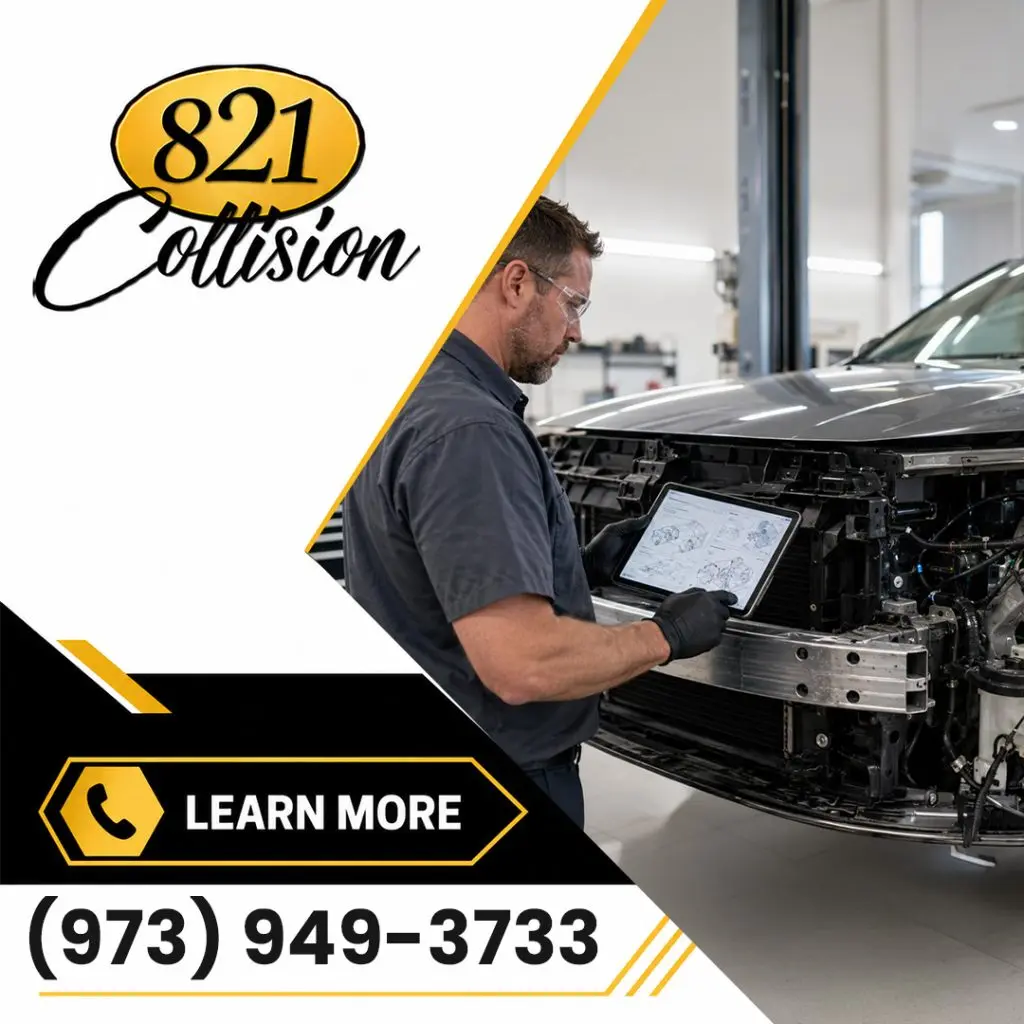
A local auto body repair shop that removes the cover can check brackets, wiring, and sensors that a glance from the outside can’t confirm. Even a fender-bender needing basic auto body dent and scratch repair is worth this extra step.
Frequently Asked Questions
Do all vehicles have sensors built into the bumper?
No. Older or base-model vehicles often rely only on a reinforcement bar and foam absorber, while newer trims add parking sensors, cameras, or radar units.
Can a bumper be repaired without removing it from the vehicle?
Minor surface work is sometimes possible in place, but repairs involving brackets, wiring, or sensors usually require removing the cover.
How long does a bumper sensor recalibration take?
Recalibration typically adds a few hours to the repair timeline, depending on the vehicle and whether static or dynamic calibration is needed.
Will a bumper repair affect my vehicle’s warranty?
Following OEM-approved procedures generally keeps the manufacturer’s warranty intact. Unapproved shortcuts are more likely to cause issues.
Ask Us What’s Behind Your Bumper
A quick look at the paint only tells part of the story. 821 Collision can open things up and show you exactly what’s involved- sensors, brackets, and all- before any work begins. Contact our team today at (973) 949-3733 or email admin@821collision.com to get the full picture.