Aluminum and steel react badly when mixed during a repair, so shops must use separate tools and workspaces to prevent corrosion. At 821 Collision, we treat this as a safety requirement, not a preference, whether it’s a full structural job or routine auto body dent and scratch repair. Co-owner Ken Miller, who serves as President of AASP/NJ and sits on the I-CAR Advisory Council, has helped shape this shop’s approach around exactly this kind of manufacturer-level discipline. That advisory-level involvement in setting industry repair standards is part of why 821 Collision’s process reflects current best practice rather than shortcuts.
What Happens When Aluminum and Steel Repairs Share a Workspace?
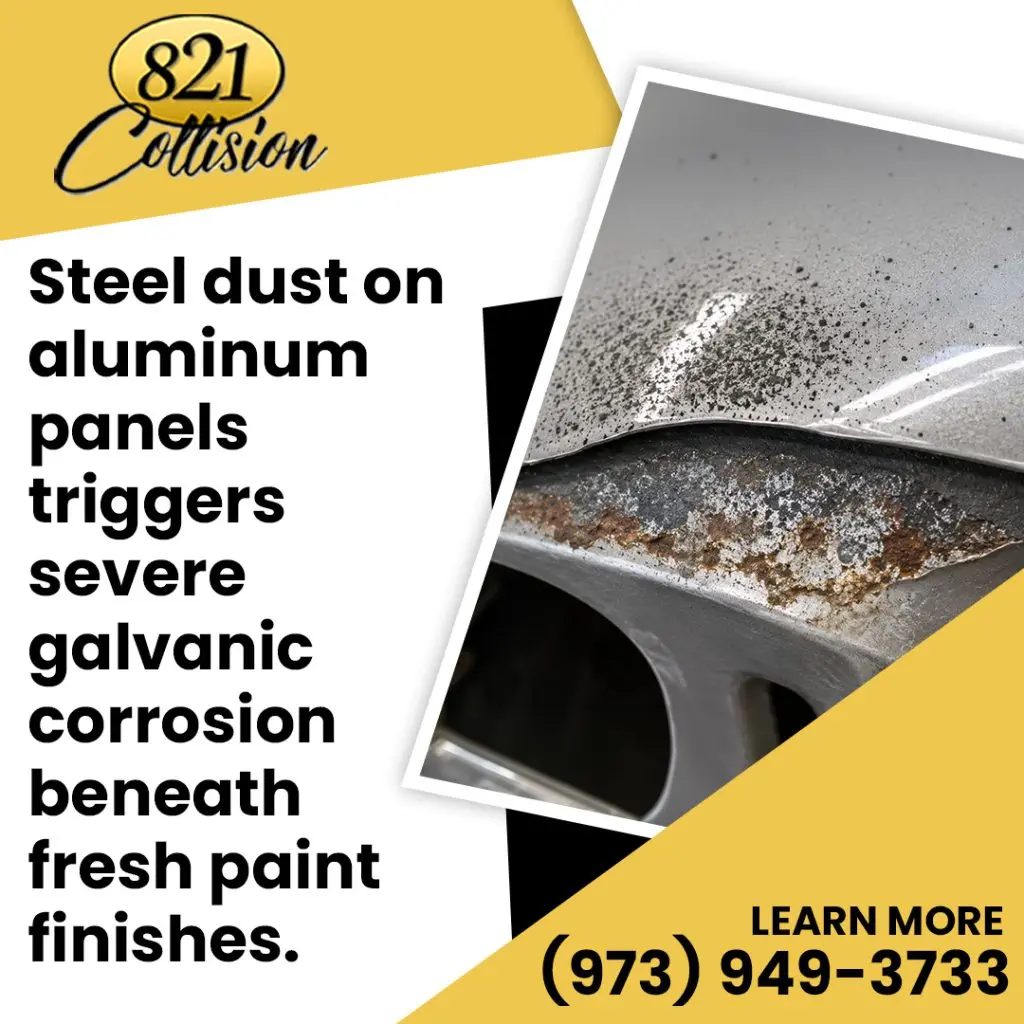
Mixing aluminum and steel tools or work areas can damage a repair before it’s finished, which matters for anyone getting auto body repair near Prospect Park, NJ. Steel dust left on aluminum, even in tiny amounts, starts a chemical reaction that weakens the metal underneath the paint. Over time, this can show up as bubbling, pitting, or a finish that fails long before it should.
How Galvanic Corrosion Happens
According to I-CAR’s Repairability Technical Support, cross-contamination from steel particles into aluminum causes galvanic corrosion, which can appear as bubbling or pitting under the finish long after the repair is complete. This is why shops cannot use the same sanders, grinders, or work tables for both metals. Once contamination sets in, the damage is often hidden under paint until it resurfaces months later.
What Tools Can’t Be Shared Between Aluminum and Steel Repairs?
Certain equipment must stay dedicated to one metal type only. Sharing any of the following risks contamination:
- Sanders and grinders
- Welding equipment and settings
- Work tables and floor mats
- Dust extraction systems
- Hand tools like clamps and pry bars
A local auto body repair shop that skips this separation puts your repair and your resale value at risk. Even a single shared sanding disc can carry enough stray metal to start the reaction, which is why proper shops keep entire tool sets, not just individual pieces, dedicated to one material.
How Do Aluminum and Steel Repair Setups Compare?
| Factor | Steel Repair Area | Aluminum Repair Area |
| Workspace | Shared or open bay | Isolated, sealed bay |
| Tools | Standard steel tools | Dedicated aluminum-only tools |
| Welding | MIG/spot welding | Specialized aluminum welding |
| Technician training | General collision training | Aluminum-specific certification |
Shops that repair both metals need to maintain two complete setups, not just extra tools, whether the job is a full repaint or basic auto body dent and scratch repair. That means separate floor space, separate ventilation in some cases, and technicians trained to switch between two very different repair philosophies. This kind of aluminum-specific setup is exactly what’s required for certifications like Cadillac CT6 Aluminum and Hummer EV, two programs 821 Collision holds that call for dedicated aluminum bays, isolated tooling, and high-voltage safety training beyond what a standard steel shop maintains.
What Should Homeowners Ask Before Choosing a Shop?
Ask directly whether the shop has a dedicated aluminum bay and aluminum-certified technicians. A shop confident in its process will walk you through it without hesitation.
- Do you have a separate room or bay for aluminum repairs?
- Are your technicians aluminum-certified, not just steel-trained?
- Do you use dedicated tools for aluminum work?
- Can you show documentation of your certifications?
Any local auto body repair shop should be able to show you these workspaces before you agree to a repair. 821 Collision maintains separate certified workspaces for both metals, so nothing gets cross-contaminated during your repair.
Frequently Asked Questions
Does my insurance company care which shop I use?
Insurance can suggest a shop, but you have the right to choose where your vehicle is repaired.
Can any body shop add aluminum capability?
Adding aluminum capability requires a separate bay, dedicated equipment, and manufacturer training, so not every shop invests in it.
Will contamination show up right away?
No. Galvanic corrosion often develops weeks or months after a repair, which is why prevention matters more than a quick fix.
Get a Repair Built for Your Panel Material
Aluminum and steel repairs are not interchangeable, and neither are the shops that handle them. 821 Collision maintains separate, certified workspaces for each metal, so your repair is handled correctly the first time. Call us at (973) 949-3733 or email admin@821collision.com to schedule an estimate.